


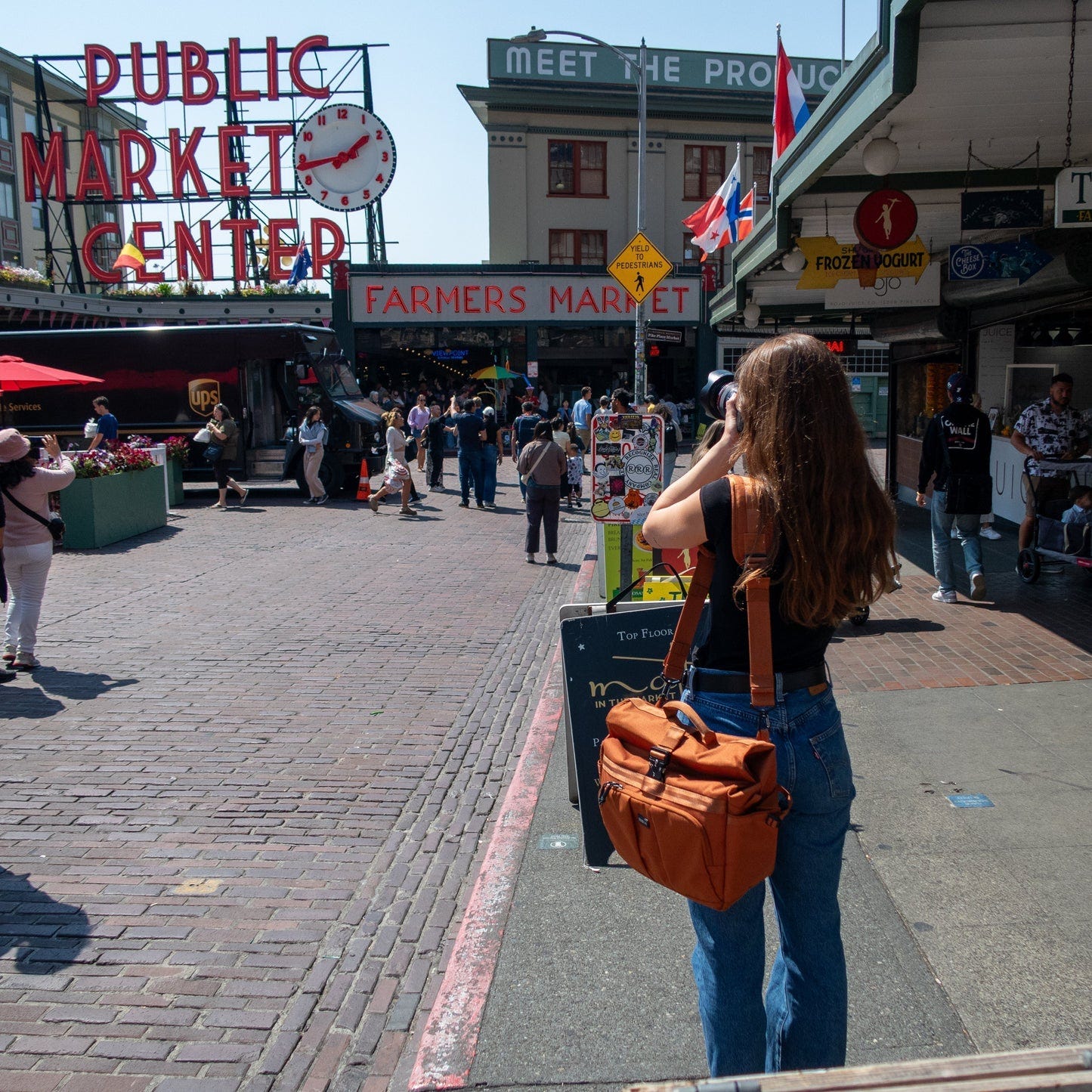
Story and photography by Bella Zandoná
Photos featuring Bella by Fernando Zandoná
Most of my photographs today are taken underwater. My camera usually lives inside a housing, surrounded by strobes, arms and pressure, but for this photo walk, I left all of that behind.
Growing up, the water was always somewhere in the background of my life. It was where I spent weekends, went exploring, learned to dive, and learned to photograph. Looking back, I don’t think I realized how much the places I grew up had shaped the way I see the world. Seattle has made the ocean accessible to me. It gives me a place to ask questions, to scuba dive, and to keep finding reasons to be curious.
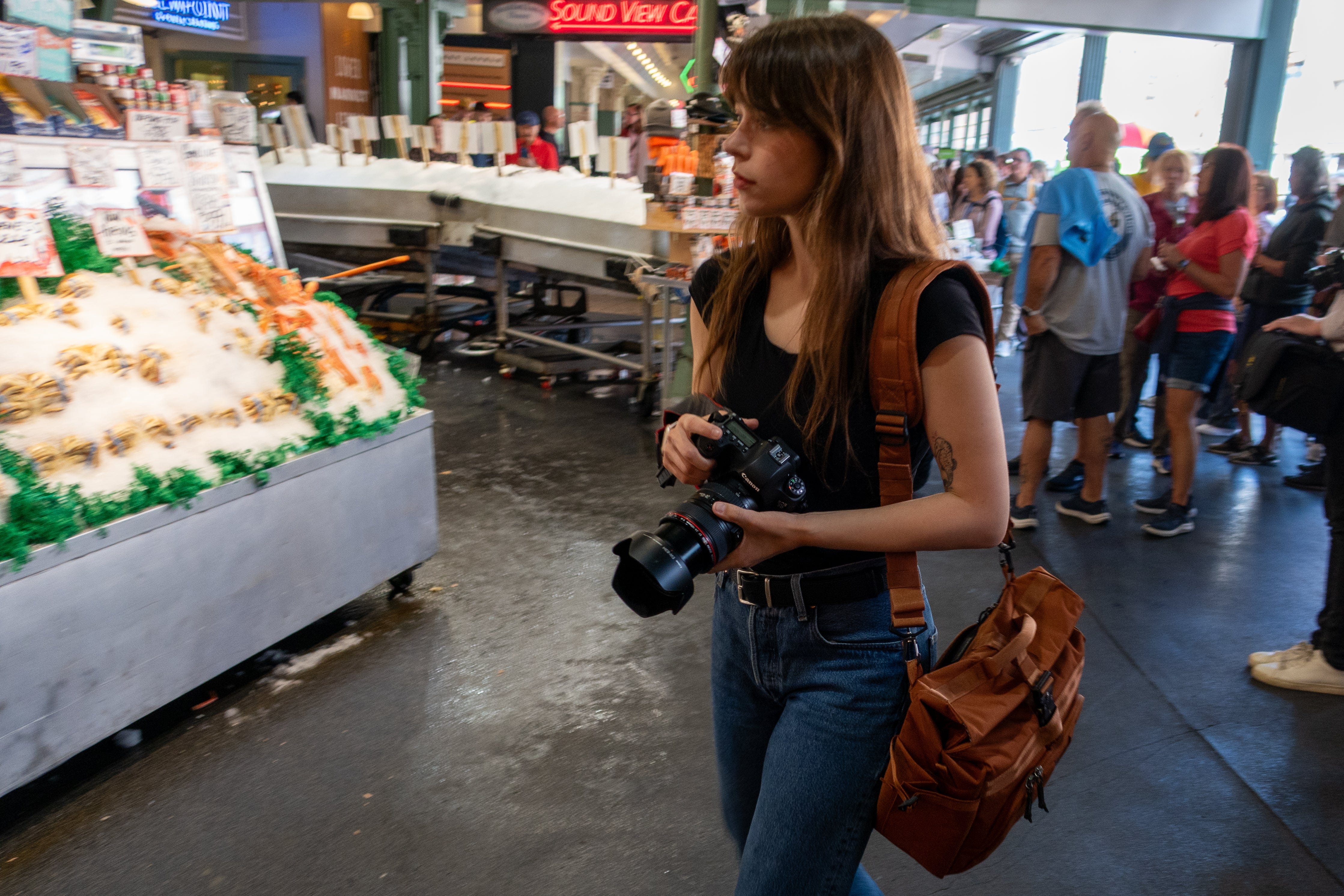
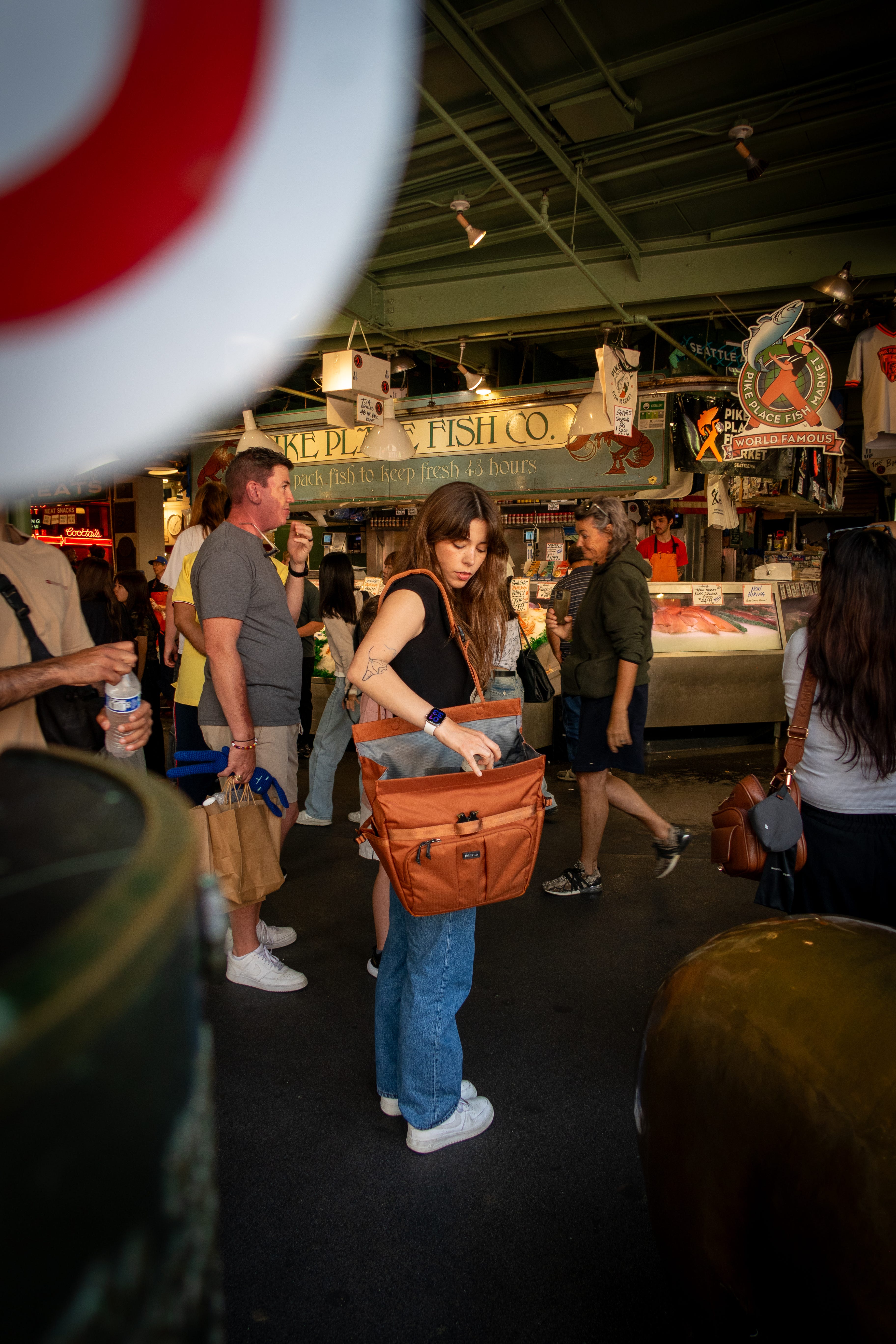
This time, though, I was staying on land. I wanted to trace that curiosity back to where it began by revisiting the places that shaped me. With my camera and my FocusPoint Crossbody over my shoulder, I set out to revisit those places with a different perspective.
Pike Place Market
My first stop was the famous Pike Place Market, a place that took me all the way back to first grade. Walking through the market and weaving through the tourist crowds, I wasn’t looking for the market’s famous flowers, or tourists taking photos with the flying fish. I was looking for squid. It sounds like a strange thing to be searching for, but the last time I came here looking for squid, I was six years old.
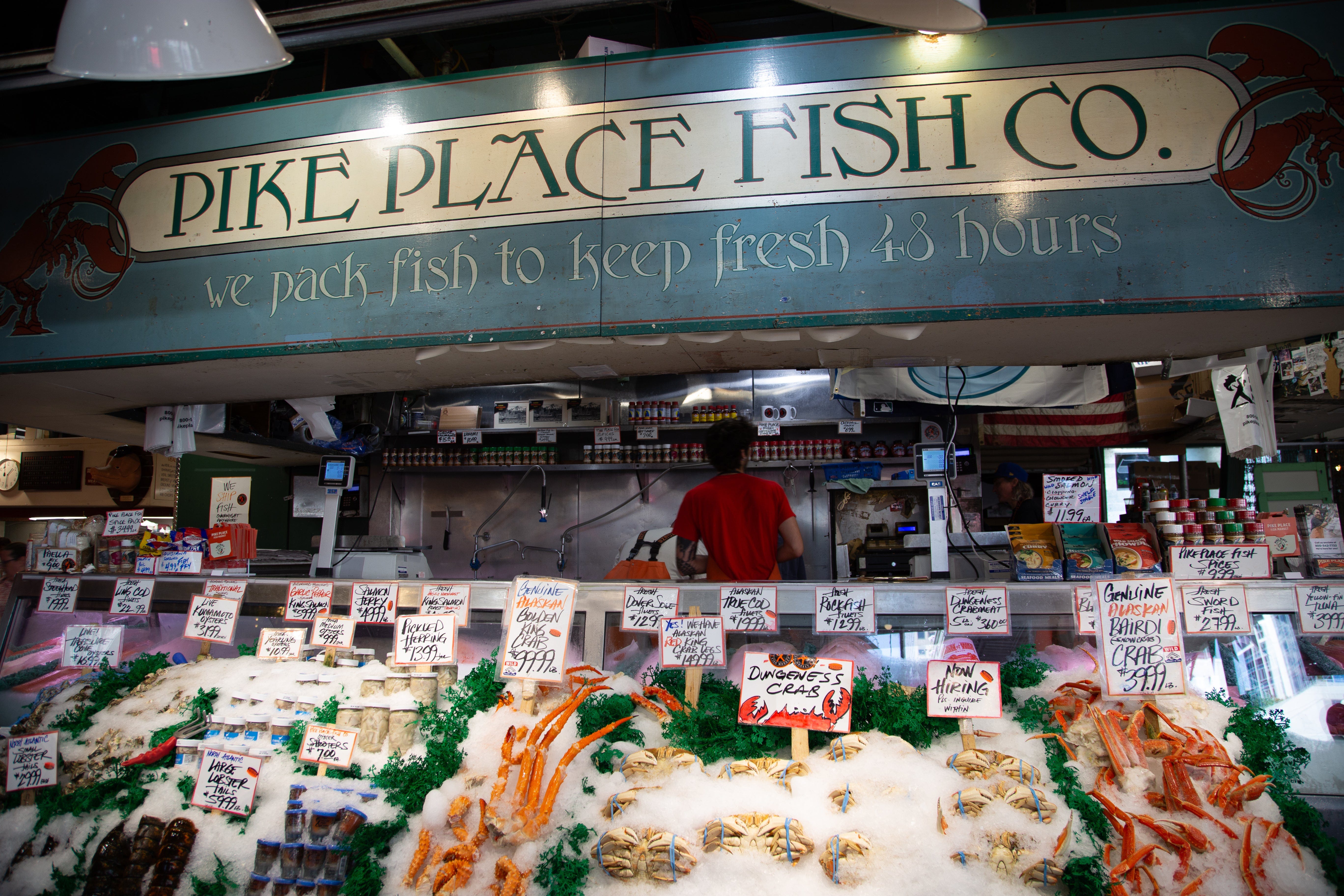


That year, I was given a science project about the ocean. We were supposed to choose an animal to research. While most of my classmates gravitated toward dolphins, whales, and sea turtles, I chose squid. Maybe it was their strange shape, their tentacles, or that they seemed a little more mysterious than other ocean life. Whatever drew me to them, the more I learned, the more I wanted to actually see one. Reading about squid in a book was one thing, but I needed to know what a squid was like up close.
So I went to Pike Place Market with my parents and asked the fishermen if they had any whole squid. I remember them seeming amused by the request, but they didn’t dismiss me. Instead, they started looking through their stock to see if they could find what I needed. They eventually came up with three whole squid for my project. Then, as we were getting ready to leave, they joked that I should probably take home a nice salmon for my teacher too if I wanted to be guaranteed a good grade.


I wasn’t looking for squid just because I wanted to say I had seen one. The more I read about them for my project, the more questions I had. I wanted to see for myself how everything fit together. To six-year-old me, dissecting one seemed like the obvious next step.
The moment we got home, I got to work. I remember being fascinated by the suction cups, running my fingers over them and comparing what I was seeing in front of me to the diagrams I had been studying in my book. I could finally see the different parts I had spent so much time reading about, not as illustrations on a page, but as pieces of a real animal in front of me. I looked closely at the tentacles, the body, and other structures, trying to understand how everything fit together and what each part did. The more I examined the squid, the more I wanted to understand it. I wanted to know what everything was, how it worked, and why this animal was built the way it was. By the time I was done, I had another idea: all the other kids needed to have this experience, too.
The day before my presentation, my teacher thought I was joking when I asked her if I could bring squid to class. The next day, I showed up with two dead squid in a small Tupperware container and a box of rubber gloves. I’m not sure what she thought when she realized I had been serious. No other kid brought in real animals to the classroom for this project, so my booth quickly became populated by curious classmates. I’m also fairly certain the smell of dead squid was less exciting for my teacher than it was for the rest of us.
What started as a first-grade science project ended up introducing me to marine biology. Until then, I had been interested in the ocean and its animals, but I didn’t realize that people could actually make a career out of studying them. Learning that marine biology was a field of science, and that there were people whose jobs were to understand marine animals and ecosystems, completely captured my attention. From that point on, becoming a marine biologist was the goal.
Seattle Aquarium
From Pike Place, I continued my photo walk to another place that had shaped my fascination with the ocean: the Seattle Aquarium.
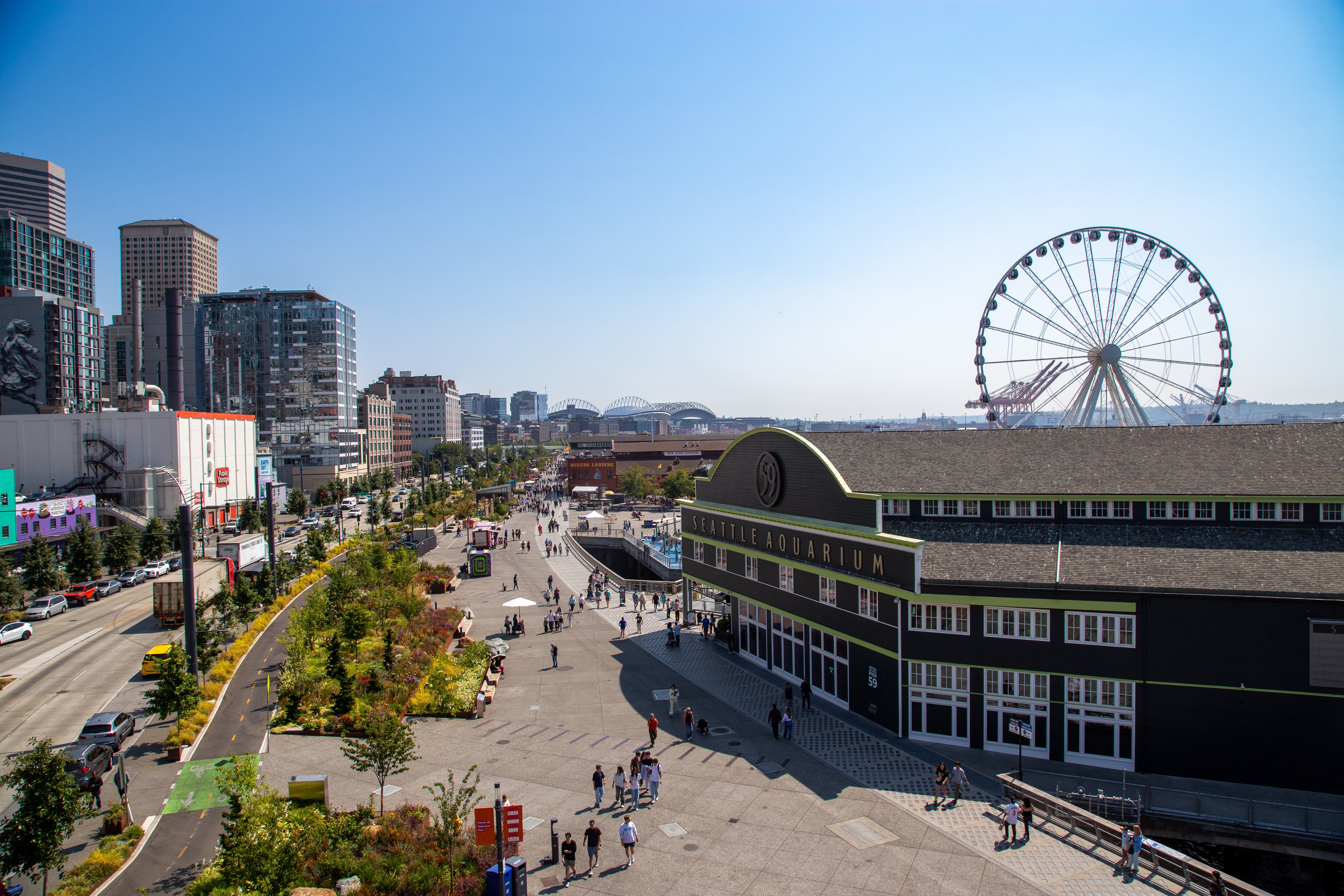
I visited the aquarium so many times with my parents that it became a constant in my life. As a kid, I loved seeing the animals, but I also loved being able to learn about them. The aquarium grew with me. What had started as a place to see cool animals became a place where I could learn more about what fascinated me about them. There is something different about seeing an animal in person. Books can tell you what an animal looks like, where it lives, and how it behaves, but standing in front of it gives you an opportunity to actually watch it. I think that distinction became increasingly important to me. I didn't just want to know about the ocean. I wanted to experience it.
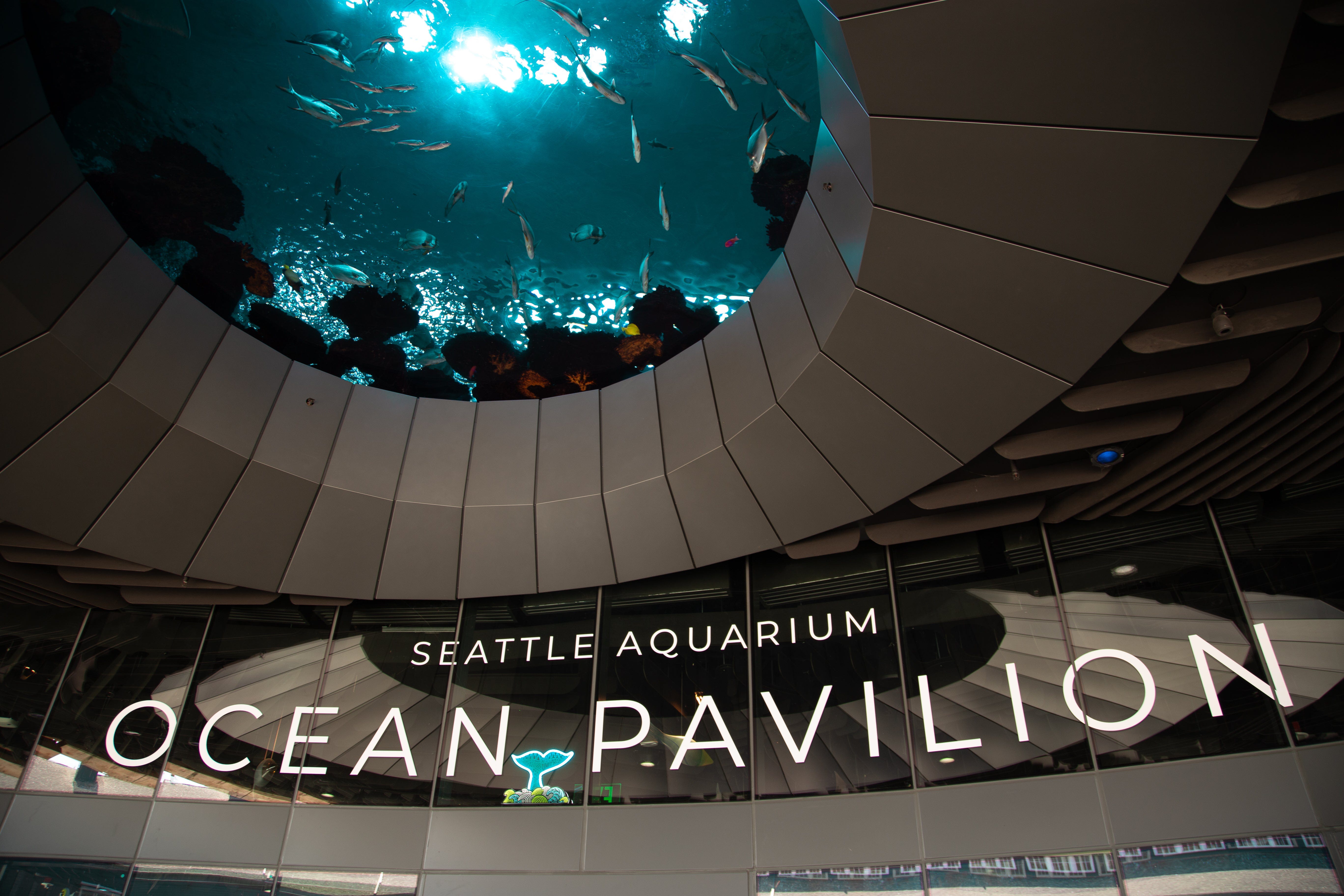
This time, when I walked through the aquarium with my camera, I found myself remembering how often I stood in those same spaces as a kid. I was still looking at the animals, but now I was also thinking about how much my relationship with them had changed over the years. As a child, I came to the aquarium because I wanted to see marine life. Later, I came because I wanted to understand it.
Constellation Park
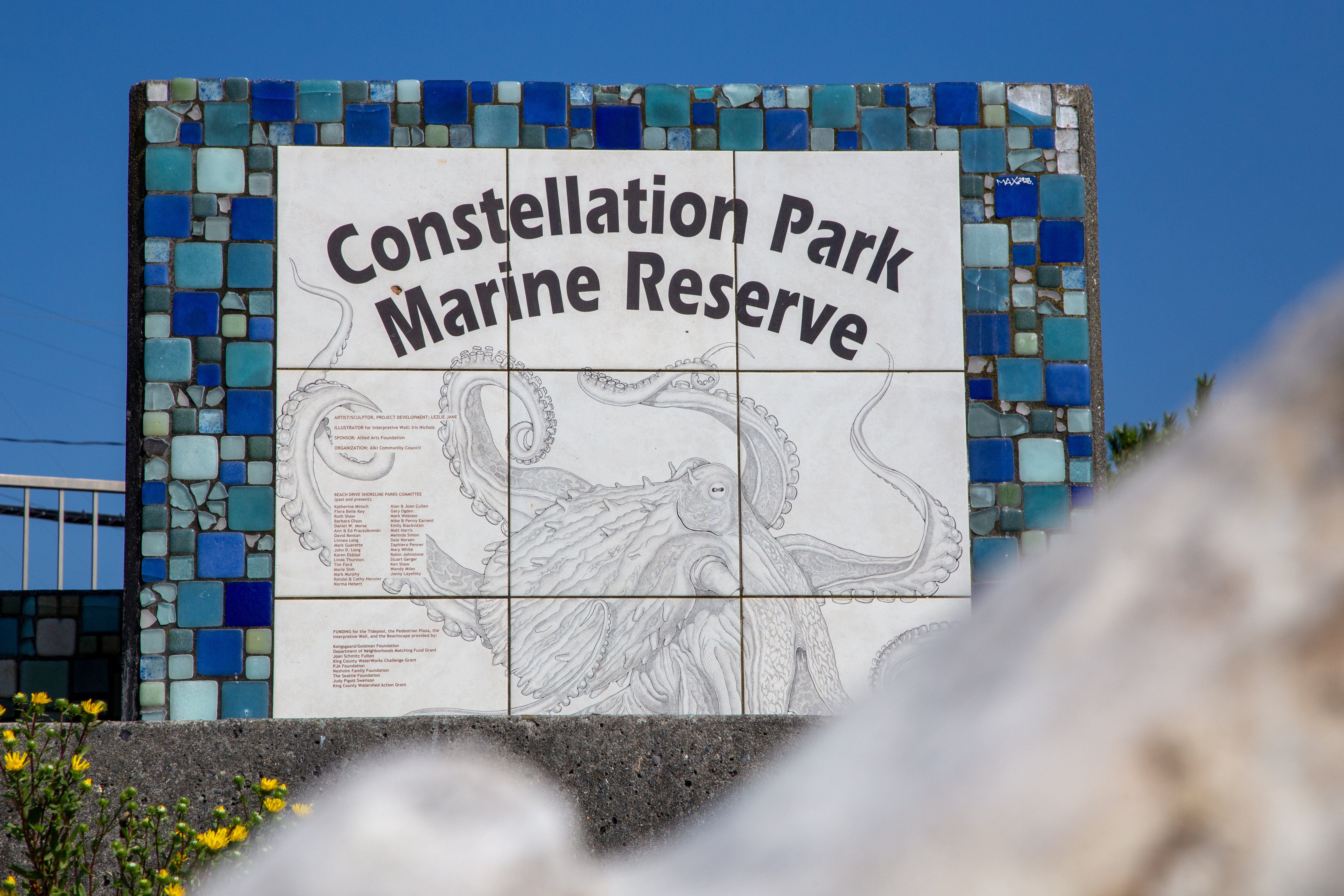
From the aquarium, I continued my photo walk to Constellation Park, another place that had kept me connected to the ocean as I was growing up. I spent a lot of my childhood there with my dad, exploring the shoreline and waiting for the tide to go out so we could see what had been left behind.
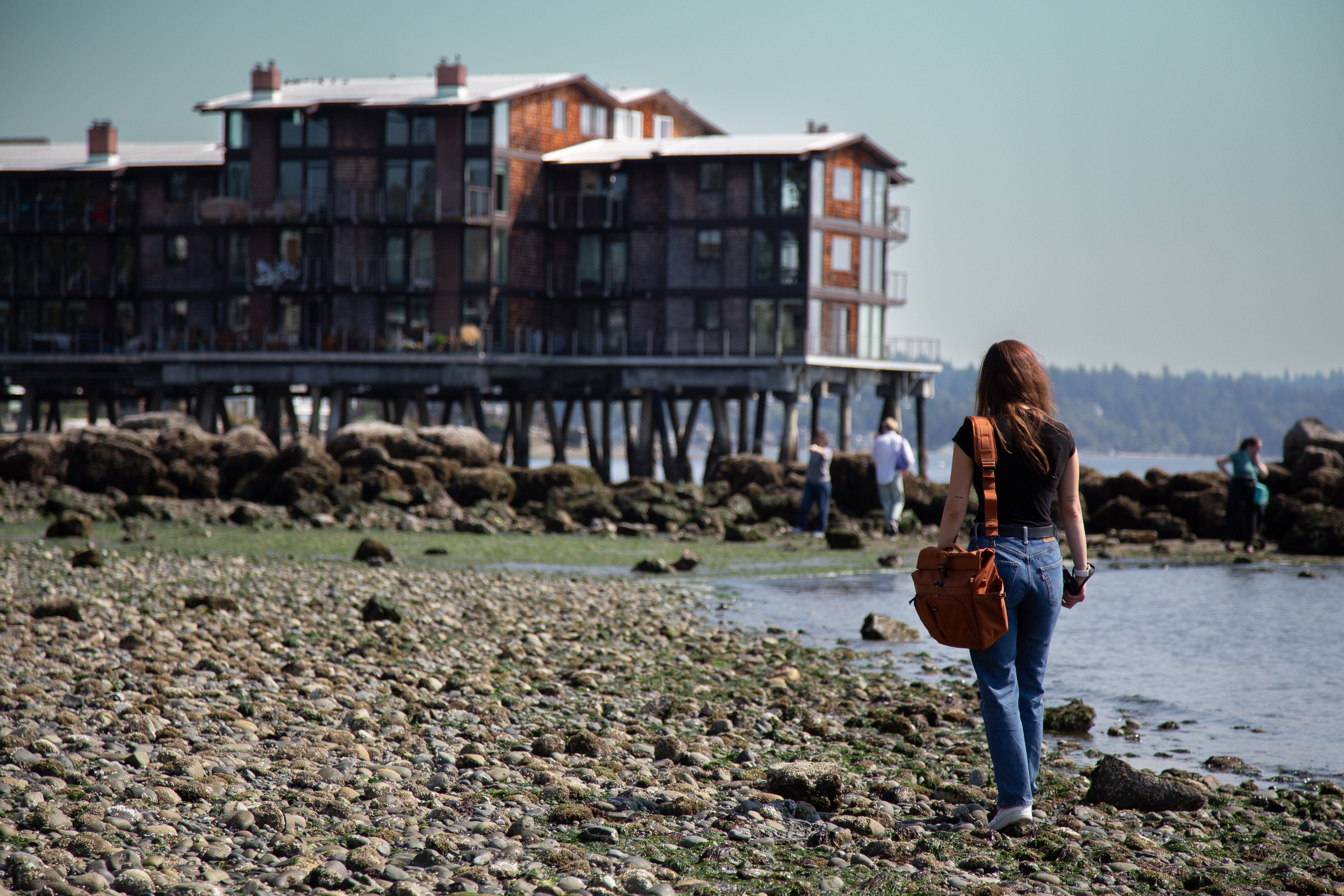
We would flip over rocks looking for crabs, poke around the tide pools, and try to figure out what was living in the spaces between the rocks. I remember picking up crabs and watching them crawl across my hands, and finding sea stars that had been pulled out of the water and putting them back where they belonged. At the time, it was just something my dad and I did together. I didn’t think of it as anything more than exploring.
I have photographs from Constellation Park spanning years of my life, from when I was a little kid, through middle school and high school, and even into college. Looking through them now, what strikes me is how consistently I was drawn to the same things. I changed, my camera changed, and eventually the way I looked at and photographed the animals changed. The tide pools changed too, each tide leaving behind something different to discover, but I kept returning to that same stretch of shoreline, always curious about what I might find next.
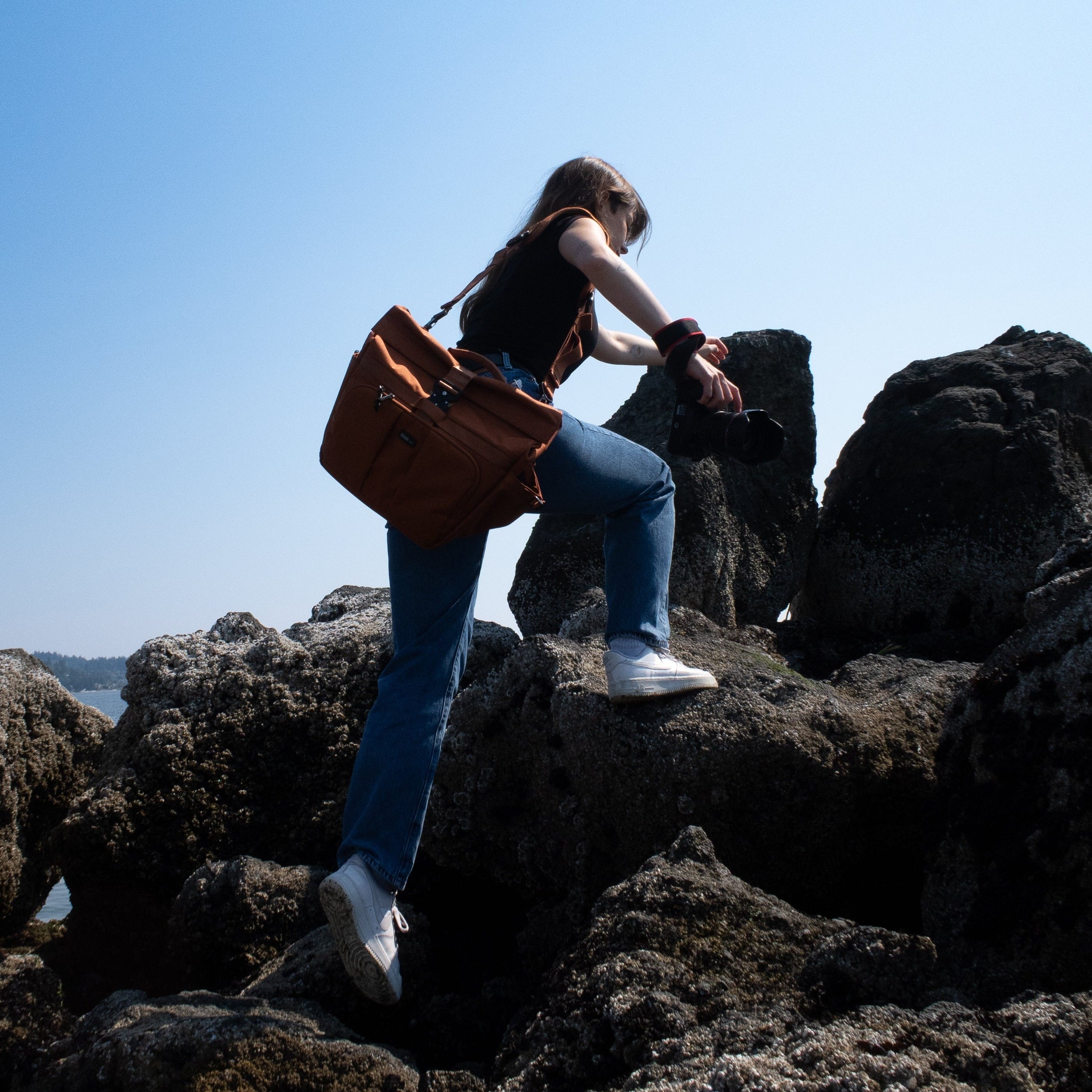
Some of those older photographs are exactly what I would expect from a kid with a camera: animals photographed from whatever angle, with more enthusiasm than technical skill. Others show how my eye gradually changed as I became more interested in photography. I started paying attention to details, looking for behaviors, and trying to capture the small things that had made me stop and look in the first place.


Coming back now, I found myself taking my time in the same way I used to. I moved from pool to pool, stopping whenever something caught my eye and crouching down to look closer. My camera was easy to reach from the FocusPoint across my body, so I could follow whatever caught my attention without breaking the flow of exploring.
Unlike the aquarium, there was no glass between me and the animals and no exhibit telling me where to look. A rock that looked completely ordinary could have a crab underneath it, or a tiny animal tucked into a crack that you would have missed if you weren’t looking closely.
Years later, that same habit of looking closely would become an important part of how I photograph underwater. Some of my favorite subjects aren’t necessarily the largest or most obvious animals. They are the ones tucked into cracks, hiding in coral, or small enough that you have to get close to barely see them with the naked eye.
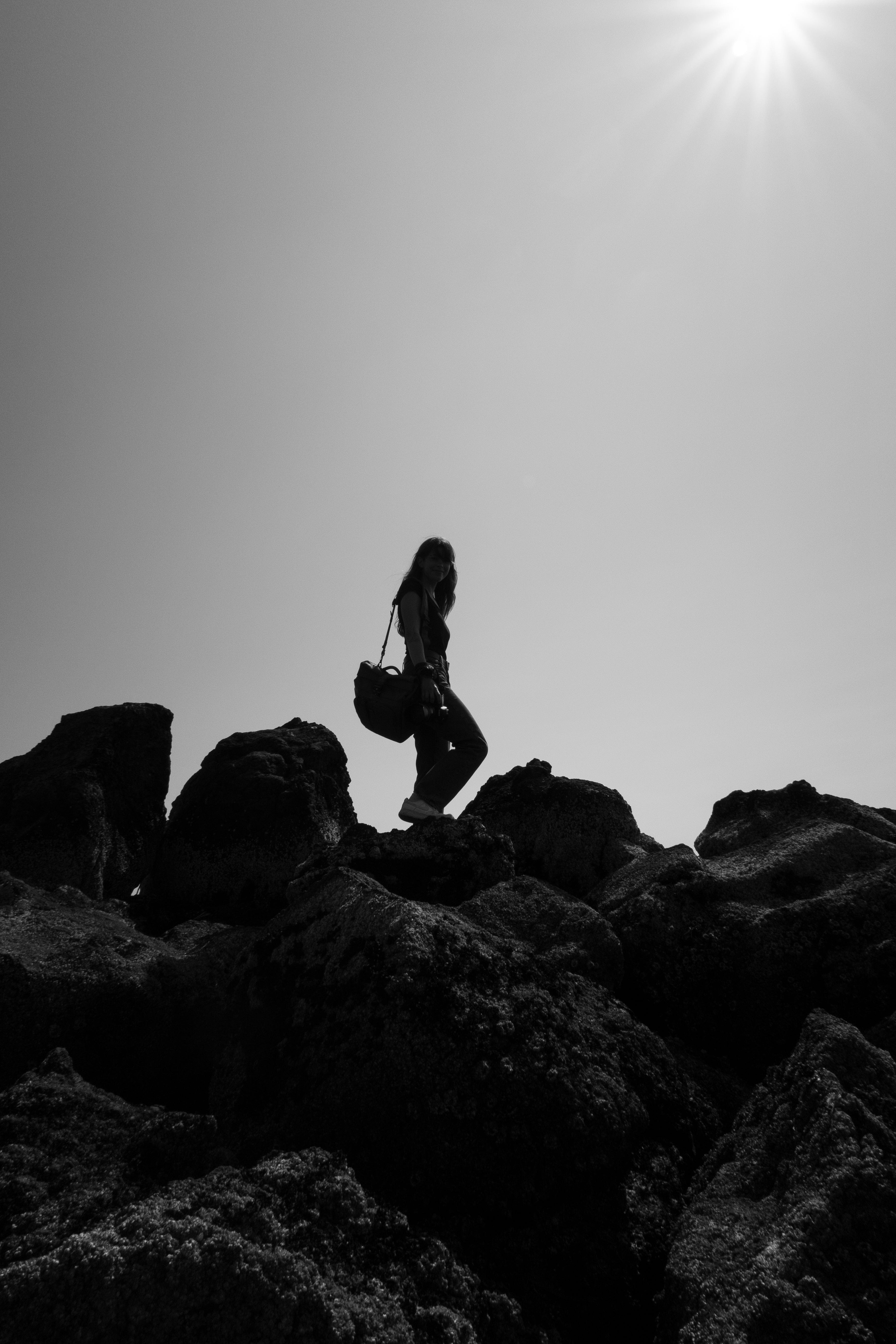
Back then, when I was a kid at Constellation Park, I wasn't thinking about photography or marine biology or what any of this might eventually become. I was just looking for what lived there. From the tide pools, my relationship with the water eventually became a little more complicated. I wanted to see what was happening beyond the shoreline, and at 17, I decided I wanted to learn how to scuba dive.
Alki Beach
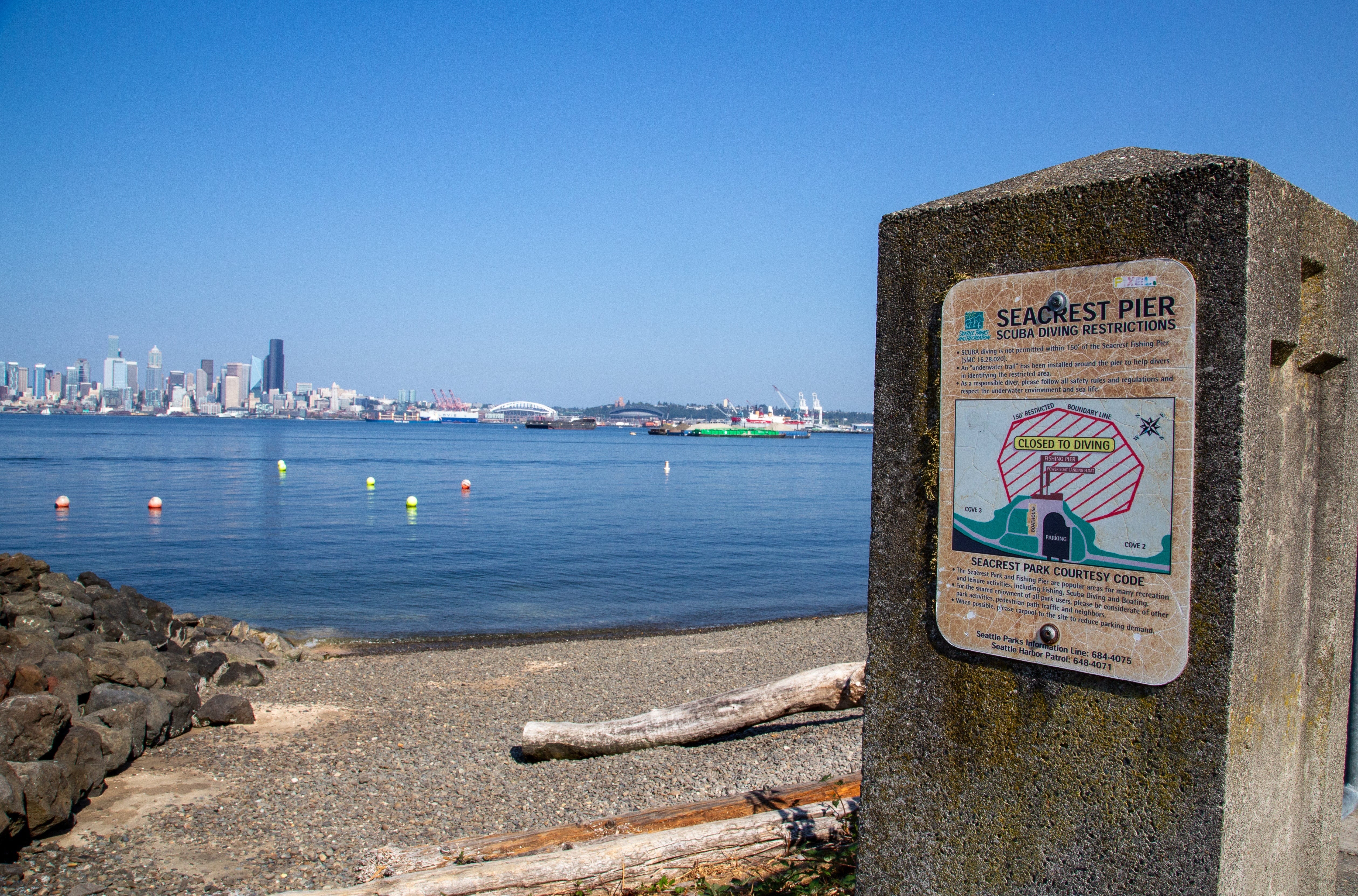
That part of my story took me to the next stop on my photo walk: Alki Beach, where I first learned to dive alongside my dad.
My certification took place during the summer, in one of the small coves along Alki. I remember the visibility being terrible. The water was dark and murky, and there were times when I could barely see my instructor in front of me. For someone learning to scuba dive for the first time, that can be intimidating.
You are already asking yourself to trust unfamiliar equipment, breathe underwater, descend beneath the surface, and follow instructions in an environment that you have no natural business being in. Then you add the fact that you can barely see the person teaching you, and it becomes a pretty good exercise in staying calm. The conditions weren’t ideal, and learning in such limited visibility was intimidating, but I was determined to see what was beneath the surface for myself.
I think there is a certain kind of bravery that comes from wanting something badly enough. You don’t necessarily stop being scared; you just decide that being scared isn’t a good enough reason not to try. By the end of that week, I was a certified diver.
At the time, I had no idea how much that decision would change the direction of my life. I wasn’t thinking about underwater photography. I didn’t know that I would eventually spend hours underwater with a camera, or that photographing marine life would become such a significant part of who I am. I just wanted to see what was underneath the surface.
I continued diving there after getting certified, and eventually it became more than just the place where I learned to scuba dive. After college, I returned to Seattle. My parents had moved to Europe a couple of years earlier, so getting back in the water at Alki without my dad felt like another kind of milestone. The same place where I had learned to trust myself underwater was now somewhere I could return to independently.
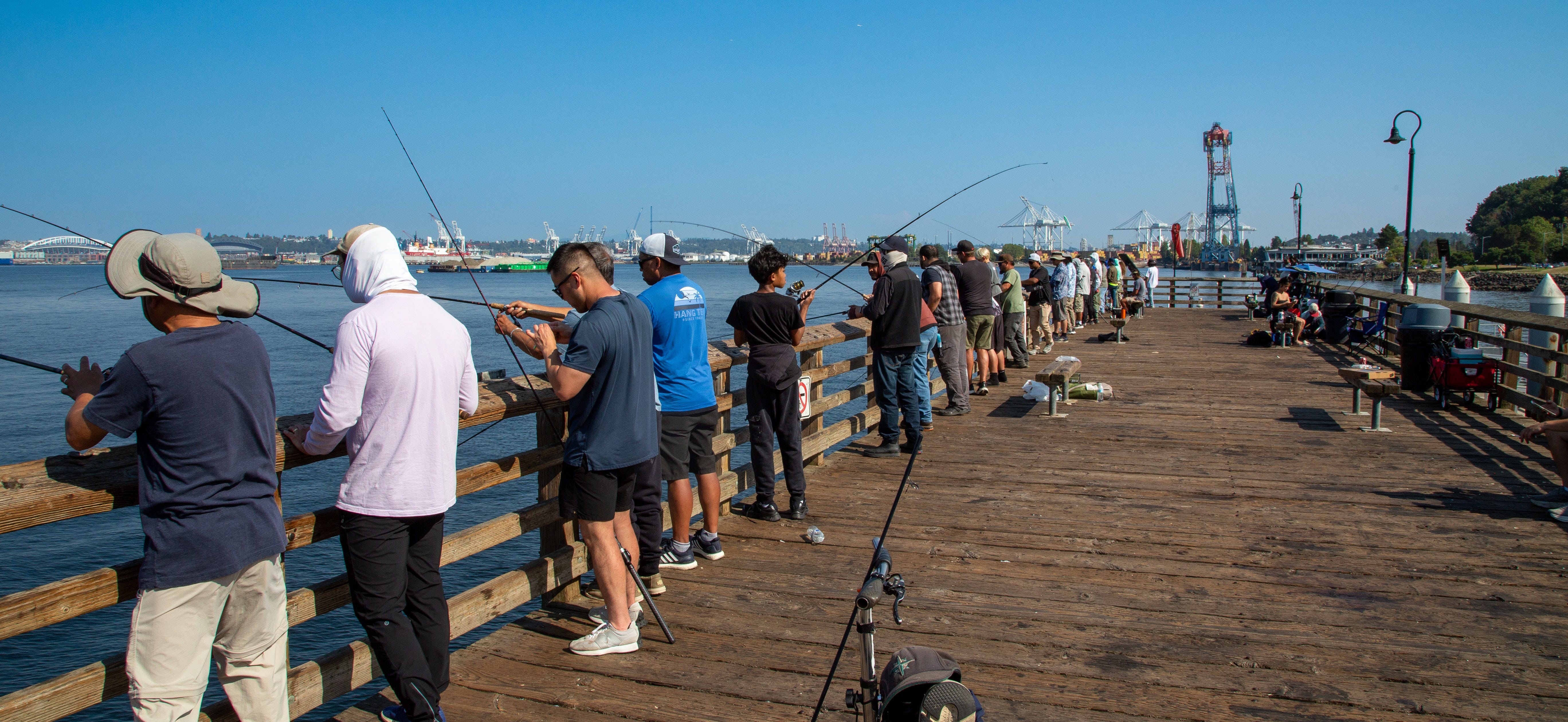
Coming back to Alki now, I found myself thinking about how many different people have their own relationship with this stretch of Seattle shoreline. Divers use it as a gateway to the water. Families come to spend the day at the beach. Kayakers and paddleboarders head out from the shore. Fishermen work along the waterfront. For some people, the water is a place to work; for others, it is where they spend their weekends, learn something new, or simply get away from the city. For me, Alki is where looking at the ocean became experiencing it, where I learned to dive with my dad, returned to dive on my own, and first explored the world beneath the surface for myself.
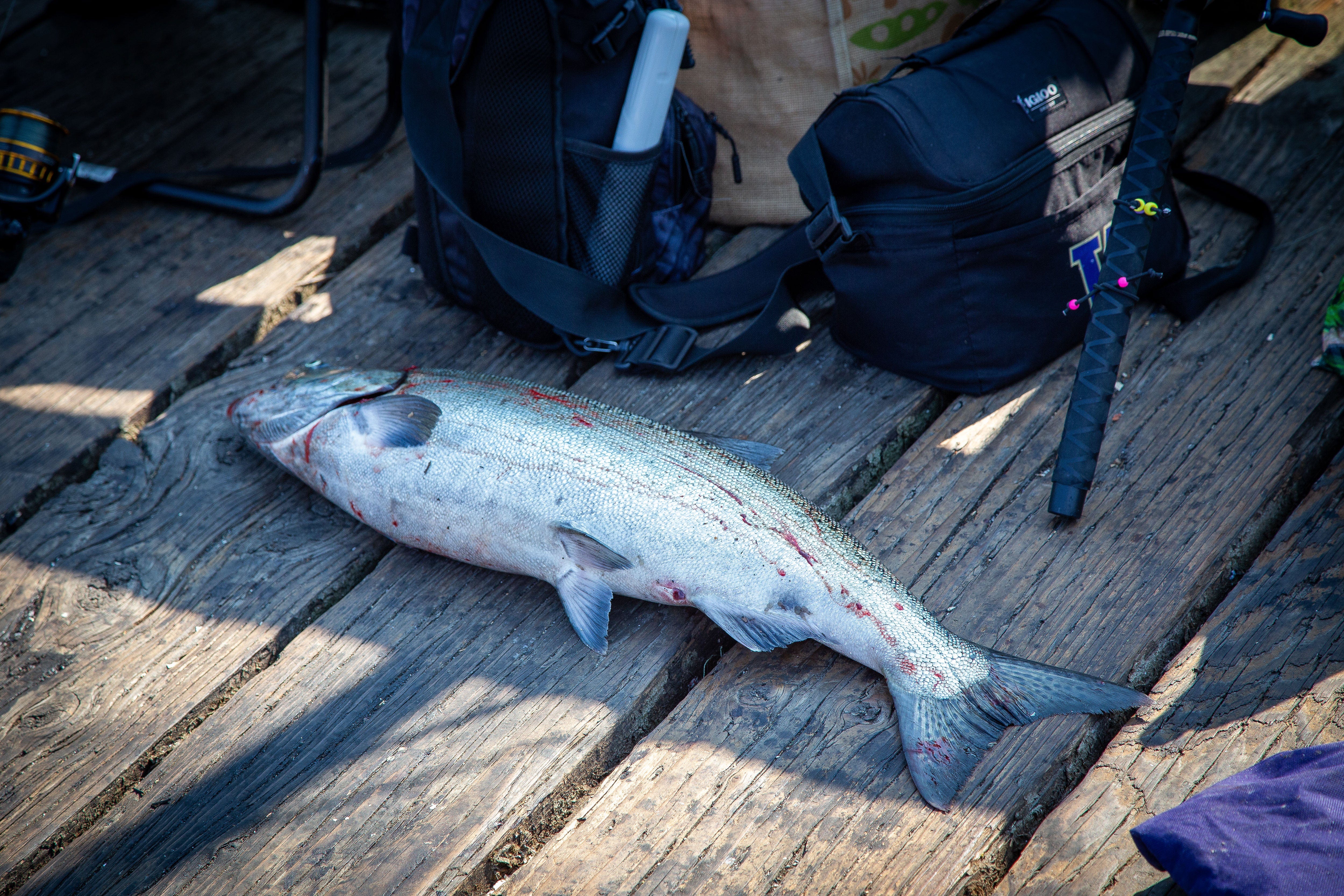
Throughout the photowalk, I found myself noticing the different ways other people had built their own connections to the water. At Pike Place, I had been photographing fishermen in a place that had been part of my childhood. At Alki, I was photographing another community that has built part of its life around the water. The people may be different, and their reasons for being there may be different, but the connection is familiar.
Looking Back, Moving Forward
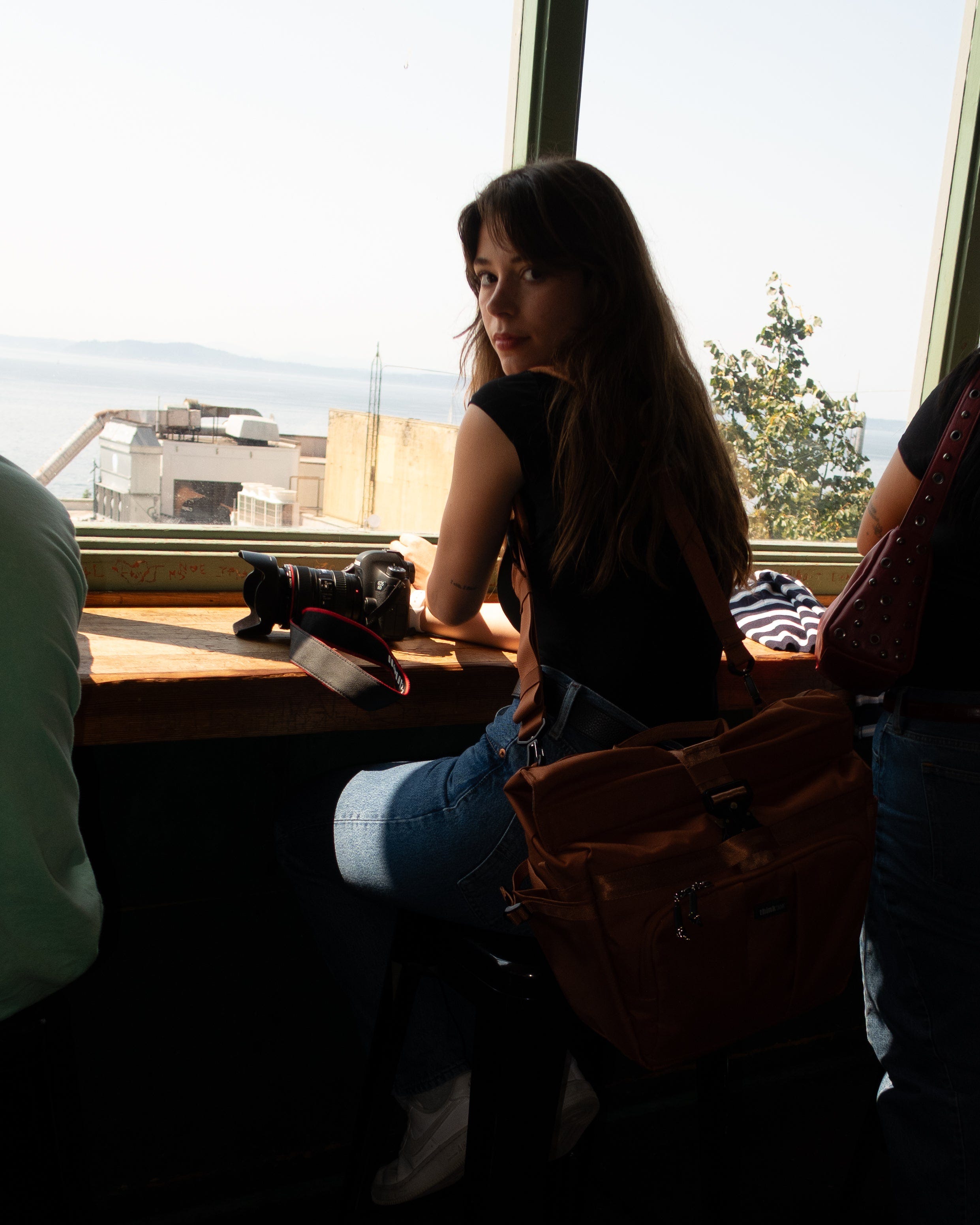
By the time I finished my photo walk, I realized I had spent the day revisiting four places that, at first, didn’t seem to have much in common. A fish market, an aquarium, a stretch of rocky shoreline, and a beach where I learned to dive. But standing in those places again, I could see the thread connecting them. Each one had introduced me to the ocean in a different way, giving me another reason to look closer, ask questions, and want to understand what I was seeing.
Those early experiences didn’t just teach me about the ocean; they taught me to keep looking for answers in it. One experience led naturally to the next, and that curiosity eventually became a path into marine biology. Diving became a way to experience the environments I had spent so much time learning about, and photography became a way to document them and share them with others.
There is something powerful about growing up somewhere that gives you the opportunity to become curious. The things that feel ordinary when you’re a kid can end up shaping the things you care about as an adult. As I walked back through Seattle with my camera, I thought about how different my equipment looked from the gear I normally bring into the water. My underwater setup has become increasingly specialized over the years, built around photographing subjects in an environment that requires a lot of preparation. But for this walk, I needed very little. Just a camera, a place to go, and a reason to look at familiar things a little differently.


Read Next
This photo walk traces where Bella’s curiosity began. Continue her story from Seattle’s shores to the icy waters of Antarctica.
Presence Beneath the Surface →
Follow Bella’s work
Follow Bella Zandoná on Instagram at @divingwithbella to see more of her photography and underwater work.
I have been to all those places and still love the ocean today.
I especially love tidepools!